| |
 |
Employment
- Are you afraid of failing a pre-employment drug
screening because of something you did in the
recent past? Did you engage in some
inappropriate behavior on vacation and now need
to know if you can pass a random test if your
employer requests one? Then DTN has a test
just for you! You can either come into one of
our nationwide collection sites to have
a confidential screening that will have your results
in 24-48 hours (call 1-800-989-1206 for the nearest
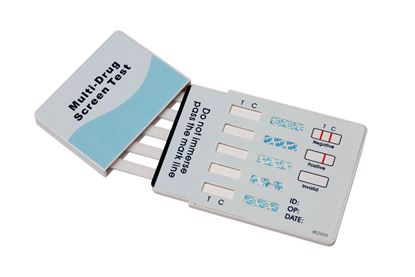
location), or you can purchase a "DTN
Instant Home Test Kit" and instantly
put your suspicions to rest in the comfort of
your own home.
|
 |
Family
Members -
Is
a child, husband, wife, sibling, parent, or In-Law
showing signs of
a drug problem? Would you like
some peace of mind? Then DTN is here for
you! You can simply purchase a "DTN
Instant Home Test Kit"
and instantly put your suspicions to rest in the
comfort of your own home. You can even keep
an extra test kit in the house for follow-up tests
or as a reminder to that special family member
that they are loved and are being monitored.
|
 |
Accusations
-
Can't remember what you did at a party or
on a date? Think someone slip you a Mickey
while you weren't looking? DTN is here to
help! In addition to the "DTN
Instant Home Test Kit"
our network of nationwide collection sites (call
1-800-989-1206 for the nearest location)
has a wide variety of tests that will give you
the answers to the questions that you must ask.
|
 |
School
Functions -
Drug
and Alcohol testing at the High School and Middle
School levels, by parents and school administrators,
may help curb the rising tide of drug and alcohol
abuse that is so prevalent in our schools
today. The Statistics below are just some of the
examples of why testing is such an important tool.
An ounce of prevention is worth a pound of cure.
Don't be caught off guard!
|
Drug
Use Statistics and Legal Liabilities of Parents
- 60%
of youngsters who use marijuana before age 15 go on
to use cocaine.
- Between
1992-1995 marijuana usage among 12-17 year olds doubled.
- Adolescents
who smoke pot are 85 times more likely to use cocaine
than their non-pot smoking peers. 60% of youngsters
who use marijuana before they turn 15 go on to use
cocaine (American Council for Drug Education, 1997).
- Average
age for kids to begin experimenting with illegal substances
is 13.
- The
potency of marijuana THC levels today is 15-20 times
stronger than marijuana in the 1970's.
- On
average, kids found by their parents to be using drugs,
have been using for two years prior to discovery.
- Most
medical insurance policies have a clause that allows
them to not pay a medical claim "if there is an illegal
substance in the system, or an illegal act is being
performed at the time of the loss." Parents can be
held legally responsible for those bills.
-
Several states are enacting Parental Responsibility
Laws in which the parent is held responsible for the
behavior of the child.
-
If a child brings any amount of a controlled substance
into their parent's home or auto, the parent could
have that home or auto seized by the federal government,
regardless of having no knowledge of their child's
behavior.
- Average
cost of drug rehabilitation is $20,000-$30,000 a month,
with few medical insurers paying anything on such
a claim.
- In
1995, 19.9% of 8th-graders have used marijuana. 34.1%
of 10th-graders have used marijuana. 41.7% of 12th-graders
have used marijuana (National Institute on Drug Abuse,
5/96).
- In
1996, 4.4 percent of high school seniors had used
crystal methamphetamine at least once in their lives,
an increase from 2.7 percent in 1990. Data shows that
2.8 percent of seniors had used crystal methamphetamine
in 1996, more than twice the 1.3 percent reported
in 1990 (National Institute on Drug Abuse, 9/97).
- One
in five American teenagers have used inhalants to
get high (National Institute on Drug Abuse, 1996).
- The
percentage of 12-to-17-year-olds who have ever tried
heroin has more than doubled and just as many eighth-graders
as 12th-graders have tried heroin. There were 141,000
new heroin users in 1995, and that there has been
an increasing trend in new heroin use since 1992.
Estimates of use for other age groups also increased,
particularly among youths age 12 to 17: the incidence
of first-time heroin use among this age group increased
fourfold from the 1980s to 1995 (National Household
Survey on Drug Abuse, 1996).
- In
1996, 6.5 percent of 10th-graders had tried cocaine
at least once, up from 5.0 percent in 1995. The percentage
of 8th-graders who had ever tried cocaine rose significantly
from 2.3 percent in 1991 to 4.5 percent in 1996 (National
Institute on Drug Abuse, 1/96).
|